Tuesday, 7 February 2012

Verbs to Avoid in Novel Writing

The use of certain verbs can undermine the quality of your writing. The following simple writing exercise will tighten up your writing style and enforce the use of more creative verbs.

Creative Writing Exercise on Verbs

Improving your writing involves lots of practice and employing a certain amount of lenience. But watching out for the perils of passive writing, overuse of adjectives and clichés provides a quicker route to a sharp writing style. The focus of this article is however, the use of certain verbs such as: felt, hear, see and taste, the overuse of which I feel can be indicative of lazy writing. Take the following example:

Lazy Writing in Novels

‘She felt a sensation of dizziness as she struggled through the opener. She saw spots form in front of her eyes and she could smell the dinner burning. With renewed urgency, she forced her way through, rucking her dress.’

Pointless Words in Fiction
Let’s take this sample a little at a time. ‘She felt a sensation of dizziness as she struggled to climb through the opener.’ Dizziness cannot be seen or tasted; it can only be felt, so the verb ‘to feel’ is redundant in this context. For that matter, so is ‘sensation.’ Both words can be cut and replaced with one active verb to do the job of both.

I altered ‘dizziness’ to ‘vertigo,’ for it is a punchier noun. I also gave ‘vertigo’ something to do by pairing it with an active verb. The following suggestion is an improvement:

‘Vertigo surged through her as she struggled through the opener.’

How to Use Verbs in Writing more Effectively

Active Writing for Senses
The next part of the excerpt is, ‘she saw spots form in front of her eyes.’

Spots can only be seen, not felt or heard, so the verb ‘to see’ is redundant in this sentence. ‘Spots forming in front of the eyes’ is also a cliché. Why not change the whole sentence into one that centres upon a strong active verb and a noun? Snowstorm or blizzard is an improvement. Try

‘A frenetic blizzard splotched her vision for an instant.’

This cuts the use of ‘saw’ and creates a more dynamic sentence.

Creative Writing with Verbs

The third sentence, ‘…and she could smell the dinner burning.’

Again, the word ‘smell’ can easily be done away with. Why not change ‘dinner burning’ to a more specific description of the smell and give the resultant noun a strong active verb? An improvement might be, ‘burnt fat spiked the air.’

By cutting redundant verbs, in this case see, smell and feel, and pairing strong nouns with active verbs, the excerpt is instantly improved. The resultant excerpt might read:

‘Vertigo surged through her as she pushed her way through the opener. A frenetic blizzard splotched her vision for an instant. Burnt fat spiked the air. With renewed urgency, she forced her way through, rucking her dress.’

Example of Dynamic Writing

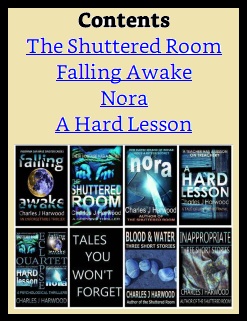
Keeping up this practice is hard when writing a full length novel. In chapter 1 of my blog novel, Nora, I avoided weak and redundant words. As can be seen in the excerpt, I avoided the words, hear, smell, see, felt etc. using only punchy adjectives and adverbs. Together with active verbs and accurate nouns, powerful imagery is created for the reader.

Creative Writing Exercise to Improve Writing

A novel littered with redundant verbs such as feel, hear and smell can have the accumulative effect of a writing style that is flabby and lazy. Substituting such verbs for active, colourful verbs can do wonders for your writing style. Of course, not every ‘feel’, ‘see’ or ‘hear’ can be cut, but by looking out for them and changing as many as you can, will create a more dynamic reading experience.

Articles to Help Improve Writing Style

Passive writing
Great themes for your novel
Overcoming writer's block
Writing dialogue for fiction
How to describe emotions
More words to avoid in novel writing

Top Ten Reasons why a Blog isn’t Making Money

The aspiring freelance writer might have heard of other bloggers making a living from writing a blog. Some claim blogging can earn you thousands. This might cause the rookie blogger discontentment when income proves paltry. What are the top ten mistakes a blogger can make when trying to make money online?

Blogging Mistakes to Avoid

The reality is, blogging is like maturing wine – it takes time and patience. Money does not come in straightaway, but the wait could be made shorter. Here are my top ten mistakes to avoid when blogging for money:

1 Using the Blog as a Weblog

If you want your blog to earn cash, offer useful information that will draw readers the world over. If you are simply keeping a weblog about a personal journey or diary entries, the blog is unlikely to draw visitors beyond family and friends. On the other hand, if you utilize the blog for writing articles people will find useful or interesting, you are likely to attract traffic beyond this inner circle. This means choosing a niche subject matter. Choosing the best subject matter for blogging requires careful thought and is covered in a separate article.

2 Writing about Something Everyone Else is Writing About

Writing about something everyone else is writing about will increase competition with other websites. Why write about ‘getting out of debt’ if there are a multitude of authoritative websites offering the same information? Other such subject matter might be ‘how to lose weight’ or ‘make money fast.’ Go for a less competitive niche subject matter with lower overall competition on the Net and you will attract more traffic to your blog.

3 Not Using Keywords Effectively.

Not using Google’s Adwords Keyword Tool will leave you in the dark. Keywords will get your blog found, and getting found means increasing traffic. I have written a separate article on beginner’s guide to using keywords for articles. In a nutshell, title your article accurately and without puns. Google bots will not understand irony or play-on-words, so don’t title your article ‘Woow, Wicked ways to Bargain Hunt! Pepper the rest of your article with keywords people are actually using. Keyword research via the Keyword research is crucial.

4 Lack of Content on Each Blog Page

Short articles or pages that simply contain graphics or affiliate links will not get your blog found. Make sure each page contains a body of text of at least 400 words, and that the quality of the article is good: no typos, no grammos. Keep it interesting and informative.

5 Not Enough Articles on the Blog

A blog with mere ten or so posts will not do much for your pocket. The secret is to keep adding more. Google likes big blogs, those with at least twenty articles or more will fare better. The more you add, the more visible your blog will become. Don’t give up easily.

6 Google Has Penalized your Blog

A blog with poor content will plummet in the SEO rankings. This might not be necessarily because of poor writing, but poor website practices. The following are to be avoided if you want your blog to prosper:
  • Keyword stuffing. Going mad with overuse of keywords in the belief it will make your blog more searchable is a no-no. Six or seven keywords phrases in each 800 word article will suffice.
  • Content farming. Do not be tempted to copy and paste someone else’s work or this will show up when the Bots come passing by.
  • Link farming. The more (good quality) inward-bound links your blog gets, the higher in the rankings it will become, but beware of services that entice you to ‘buy’ hundreds of links for a few dollars. Too many inward-bound links looks suspicious and Google will penalize a site that has hundreds of inward-bound links from unscrupulous websites.
7 You Blog is Not People Friendly

The bounce rate of your blog (the rate at which a person clicks into your blog and clicks right out) is likely to be high if your blog simply isn’t people-friendly. This might be due to nasty popup adverts (a personal gripe of mine) or ghastly colours that make reading the blog a strain on the eyes. Look out also for:
  • Stilted writing style that is obviously an attempt to accommodate keywords. Write for people, not Googlebots.
  • Fonts are too small to read onscreen.
  • The blog, on first appearances appears to offer little – too many affiliate links, disjointed page layout or amateurish-looking graphics with little text.
  • Not easy to navigate. Perhaps the link list bears no logic, or information is difficult to find.
8 Bad Placement of Google Adverts on your Blog

Research has shown that the placement of ads on a blog page can determine whether someone clicks on it or not. The left-hand margin and the header of the webpage are two popular locations webmasters use for Google ads. But every webpage layout is different. The secret is to experiment and try out different ad placements and see how it performs. Stick to blue for your link colour and prefer a blend-in colour for the background of your ads. Avoid garish colours and of putting too many ads on your blog page.

9 Your Blog is not Evergreen

Writing about a product or event that will be outdated or yesterday’s new is a mistake to be avoided if you want your blog to keep reaping rewards. This includes software, the news, bestselling books and fashion. Yes, it might bring a surge of revenue, but how long will it last? Think about long term goal. Will the subject matter still be searched for in years to come?

10 Your Blog Lacks a Clearly Defined Audience

Who are you writing for? Getting traffic to your blog means writing for a defined audience. How can you market your products or offer information if you do not have a clear picture of what the intended audience is? An article giving advice to students on how to stretch their budget will have a different approach to writing a similar article for families. The tone and language used on your blog will influence whether visitors stick around and keep returning. Keep the audience in mind when writing your blog, and keep the style consistent.

Dos and Don’ts of Blogging for Money

The success of your blog heavily depends upon understanding how your blog can make money. Write for an audience beyond family and friends. Avoid saturated subject matter and keep your articles well-written and interesting. Take heed of keyword use, ad placements and tone of voice. Keep adding articles and your blog will get traffic in years to come. Getting traffic to your blog will earn you ad clicks.

Top Tips for Earning Cash from your Blog

Top ten tips for niche blogging for profit
Using keywords for beginners
SEO tips for dummies
Writers' guide to avoiding procrastination

Monday, 6 February 2012

Self Publishing Children’s Picture Books for POD

Self publishing children’s picture books mean understanding word formatting and image software. But that isn’t all, the page design, bleed settings and the colour of the page background will need consideration. It may seem complicated, but taking picture book production one step at a time is the key to getting your children’s book looking good prior to publication.

How to Create a Children’s Picture Book for Print

CreateSpace and Lulu are two of the biggest print on demand platforms for the self-published writer. Print on demand (or POD) means you do not have to fish out lots of money to bulk-print books to sell, as your books are printed only when a customer places an order. The publisher takes a cut, leaving the rest to you, so there is nothing to lose. This article concentrates on producing children’s picture books on Createspace.

The Best Size Format for Kid’s Books

Createspace has an array of trim sizes for different book formats. Picture books for the very young can be found at around 10x8” in size; baby books can be much smaller. The choice is up to you, but taking a look in the library to find children’s books most like yours and emulating a book format you like might be a good start. You can upload book templates (with margins and font settings ready prepared) from Createspace, or you can use the template as a guide and create your own settings. The general rule of thumb is, the larger the book, the larger the margins need to be to preserve some visual balance. The average margin settings are around 2.5cm for the outer margins, and 0.33cm for the gutter (binding edge).

Full Bleed or No Bleed for Print

Text should not extend into the outer 2.5cm of each page. More often than not, the book will contain no elements that extend into this outer margin. In such cases, use ‘no bleed’ when uploading your picture book onto Createspace.

If however, if you want images or other visual element to ‘float’ to the edges of your pages for design purposes, then you will need to select ‘full bleed’ when uploading your picture book onto Createspace. The question of full bleed or no bleed is a little complex, so I have covered this issue in a separate article.

Great Illustrations for Kid’s Books

A children’s book more often than not contains drawings, pastels, watercolours or oil painting

Formatting Pictures
s within. I prefer to scan the artwork (if the size allows) and saving them on Pictures. Set the scanner to at least 300DPI, or the images will look pixilated in print. If you do not have a scanner, use the highest resolution setting on your camera and shoot under bright, natural daylight (not artificial light or flash). Watch out for false light settings if your illustrations are on white paper, or the camera will automatically compensate and close the aperture up. I will take a light reading from a mid-toned object (like grey card) placed next to the painting and use that. Take care not to use wide angle lenses or your illustration will appear distorted. Zoom in a little, but not more than 4X or the image will be cropped and the image will be pixilated.

Place the painting/illustration against a stable easel (or the floor) and shoot perpendicular to it. If any of your illustrations need to occupy a double page in your picture book, as in a centerfold, take two pictures of your illustration: one for the left page, one for the right. Ensure the centre line is accurately calculated.

More about taking optimum photographs for book publishing can be found on my other article on improving image quality for pub books.

The Best Fonts for Children’s Picture Books

There is an array of fonts you can use for children’s picture books, some are scripty; others imply humour or informality. I like those that emulate handwriting, but take care the words are still decipherable to aid learning. Remember you can also change the colour of the font to complement the images.

Suggested font styles for children’s books might be: Bradley Hand ITC, Curlz, Kristen, Lucida Handwriting or Segoe Script.

Try out different sized fonts so that the text looks sufficiently bold for young readers. Blending images with text requires lots of experimentation and using the ‘print preview’ button. I have written a separate article on how to format images with text for print books, which might come in useful when producing your children’s book. Observe the point about inserting a dummy blank page at the beginning of your book, to see how facing pages will actually look when printed. This is crucial for getting an overall look of how images appear in context of one another or if an illustration crosses over a centerfold.

Page Colours for Children’s Books

You can also change the background colour of the book’s page. Click on ‘page layout’ on Word to find ‘page colour.’ Fine-tune the colour desired by clicking on ‘more colours.’ Pastels look good, as does punchy (but not too bright) colours.

Image Effects for Picture Books

With some simple image software or Word XP, you can create special effects to the images, by altering the outline shape of your illustrations, softening definitions or adding shadows. Captions can also be added if wished. PaintShop Pro has other effects such as ‘metallic, airbrush or sepia tones, which are worth tinkering with if you want to attain a particular effect with some of your illustrations.

Elementary Picture Book Production

Take note that most children’s picture books for the preschool reader are 32 pages long and around 1000 – 1500 words long. Add flair to your book by making the prematter as attractive as the main story, as the preliminary pages of your book will be the first thing a potential buyer will see when viewing the ‘look inside’ feature. Insert a graphic or sample illustration next to the copyright matter.

Tips for Writing Children’s Picture Books

Once you have uploaded your children’s book onto Createspace, order a proof copy. Issues otherwise invisible when viewing your book onscreen will suddenly become apparent. Solutions to problems that are likely to crop up are covered in the article links below.

Related Articles to Publishing illustrated Children’s Books

Beginner’s guide to using Createspace
Full colour bleed or no bleed when producing print books?
Formatting images with text for print books
Take great photographs
Create your own book cover

The Pictures in My Book are Poor

Publishing an illustrated book on POD requires not only word-perfect text, but excellent quality images. Poor quality images can make a self-published book look amateurish. How does the writer ensure the images within the book are excellent quality?

Good Quality Images with Text

Creating a professional-looking book for print on demand (or POD) is crucial for sales. The proof copy of a picture book from Createspace or Lulu could reveal image issues not apparent onscreen. The causes of poor quality are numerous, but could be:

The image appears pixilated or fuzzy. This might be due to sourcing the images from a website offering copyright free images, such as Wikimedia Commons. Viewing images on screen may appear to have good resolution until panning in a little, where pixilation is soon apparent. Even an image of seemingly sufficient bytes in dimensions (around 2000 on either side) can be poor quality.

Images with less than 300 DPI (dots per square inch) may appear pixilated in print. You can check the pixilation by clicking on ‘image properties’ when viewing an image in Pictures. You can increase the DPI of your image with Irfanview (free imaging software) or PaintShop Pro. Look out for the ‘resize’ or ‘resample’ button on the tools bar of either.

Reason for Poor Images in Print

Poor images might also be due to the following:

The pictures taken are from a digital setting with low resolution, which might be caused by poor lighting or a fast shutter speed (for action shots). Camera shake might also be an issue. More about taking perfect pictures are covered in a moment.

When saving the book as a PDF, you might have selected ‘minimum size (publishing online)’ without realising. This selection will reduce the quality of your images. It is better to select ‘standard publishing’ (from print) when saving the book file for print.

The images might have been compressed in your book file with the aim of reducing the file size. Compressing images will degrade the quality of images, regardless of what you do to the images afterwards. It is better to delete the image from the word document and insert the image from My Pictures from scratch. Don’t compress images unless the book is to be published on Kindle.

Tips on Publishing a Book with Images

I prefer to use my own images within my picture book and therefore will take my own photographs or provide my own illustrations. If the photograph itself is of good quality, you will have less to worry about. For good photographs, ensure your have:
  • Good lighting. This is crucial. I avoid flash photography or artificial lights. Prefer a bright cloudy day. Nothing beats natural daylight.
  • Watch out for reflections and bright light fogging out an object. It is better to shoot back-to the main source of light. Avoid taking shots too near a bright object unless you want reflected light to soften harsh shadows.
  • Use the highest resolution setting. This can usually be found under ‘portrait mode.’ Avoid poor light settings and action settings unless the effect is intended. This will cause the photograph to appear grainy.
How to Take Good Photos for Picture Books

You don’t need expensive photographic equipment. A good digital camera will suffice.
Just action the following when taking shots for your book.
  • Hold the camera steady. Squeeze the shutter gently.
  • Take several similar shots to offer a choice, if some pictures don’t work out.
  • Try different angles and lighting for your photographs.
If illustrations or paintings are to be included in the book, I prefer to scan them, as white paper could create a misleading light setting and dark pictures. Set the scanner to at least 300 DPI.

Essential Image Software for Self Publishing

Even perfect photographs could be improved with a little tweaking. The following might come in useful:
  • If the photograph looks bleached-out or lacks contrast, increase the contrast a tad in Pictures. This will deepen shadows and bring out highlights.
  • If the colours are too garish, tone down the saturation.
  • PaintShop has an array of artistic effects if you want to give the image an aged look or emulate brushmarks. Remember to save the original image first.
Photo Editor for Print Books


Images might be poor quality when viewed in print: low pixilation, resolution or sourcing from the Net are common culprits. I prefer to provide my own images for my print books. Taking good photographs are possible with minimal equipment and with simple practices. Scanning is recommended if inserting illustrations or paintings into the book.

Tips on Publishing Picture Books for POD

How to format pictures with text
Bleed or no bleed for POD?
How to increase DPI of images in picture books
Beginners' guide to Createspace
Tips on writing novels

Sunday, 5 February 2012

How to Format Pictures for Epub

Inserting pictures into an ebook will not always result in the look intended when the pictures are viewed in the Kindle ereader, Nook, or Android etc. The images might be off-centre or show formatting problems. What is the best way to create a picture ebook without formatting errors?

How to Format your Pictures in Ebooks

Regardless of what the ebook is about, whether a children’s picture book or an art book, the images within must be of optimum quality before compressing. I have written a separate article on how to get the best quality images for your ebook.

The accompanying text in your ebook will also need to be properly formatted for Kindle. Again, I have written an article on how to format text for ebooks.

Software for Formatting Images for Ebooks

Before progressing further a short word about software programs that do not work well when creating ebooks. PDF for one is ideal for creating a print version of your book but not for Kindle. Mobipocket has caused me little joy when formatting text with pictures. Avoid also Word XP. The many formatting systems of ebook readers, as well as how the ebook is viewed, means the appearance of your picture ebook will vary. This is why I would recommend using the simplest programmes, namely Word 2003 and Pictures.

Ebook Image Formatting
Only then can you convert this file into Epub or Mobi, by using Callibre, a free ebook converter program. Callibre is touched upon on my article on how to create a live ToC on another article on my blog.

Creating Children’s Picture Books for Kindle

If you have published a hard copy of a children’s picture book with swirly fonts (which will not display on the ereader), coloured backgrounds and special effects, you can simply scan each page of the book and insert the resultant pictures into a Word document to be uploaded. Remember to insert a page break between each image of the file. You need only insert the copyright details, a contents page and internal links into the book. If however, you have text elements that need to be combined with images, read on.


Image Formatting for Epublishing

The size display of images in a Kindle book (not in the Word document) is dependent upon 2 factors:

1 How the image is orientated (landscape or portrait). Because ereaders are usually held in portrait mode, the picture (if taller than it is wide) will fit the proportions of the ereader screen. If the image is wider than it is high, it will appear smaller, as space will appear above and below the image.

2 The amount of accompanying text on the page. The more lines of text that accompanies the image, the smaller the image will appear on the Kindle ereader screen.

So if you want a particular picture to appear large, mininise the amount of accompanying text, perhaps dedicate a whole page to the image, providing only the title of the image. Remember to insert page breaks before and after the image.

Alternatively, alter the image dimensions so that it is not so ‘wide’, if this is the case.

Dos and Don’ts on Formatting Ebooks with Pictures

You should have beautiful-quality pictures and a word perfect Word document ready for combining into a picture ebook. But where in the text do you insert your pictures? Well, here are some mistakes to avoid when creating your digital picture book.
  • Don’t use text-wrap (pulling text around the image). This will create formatting problems with your picture book when viewed in the reader.
  • Don’t ‘float’ pictures in order to position them. Select ‘in line with text.’ This will ensure the image displays as intended in the ereader.
  • Don’t use image captions along with images as this will look ugly. Incorporate said text into the main body of the text.
  • Don’t use special effects from the Word programme, such as shadows and reflections around images, for this will not be carried over into the Kindle reader and could cause formatting errors.
How to Insert Images into your Ebook

You should now know where in the text you want to place your images regarding how much (if any) accompanying text you want with each, and whether you want the image to appear above or below the block of text. (You could place the image between lines of text but I prefer to keep the text element together.) This means your picture ebook should consist of text and images centred on separate lines.

Follow these steps to insert images into the ebook
  1. Place the cursor in the location of where the image will be in your book. Ensure to place it on a separate line to the text.
  2. Click ‘insert’ on the Word toolbar.
  3. Click ‘picture.’ This will open up your picture browser.
  4. Select the picture you want.
  5. Click ‘OK.’
Once the image is inserted in your word document, right click on the image and select ‘in line with text’. This will get rid of ‘float.’ Centre the image on the page. Ensure the program has not indented the image automatically as though a new paragraph. Backspace the image if this has happened to get the image truly centred.

Publishing a Picture Ebook

Once you have inserted all the pictures needed in your book file, click on any picture and the tool bar at the top will display ‘picture options.’ Click on ‘compress pictures’ ensuring to apply compression to all images within the document. This will reduce the file size of your ebook pictures (as pictures take considerably more memory than text.) This will make your ebook file sufficiently small to upload onto an epublishing platform, which permits around 4-5mb.

Reducing the Picture File

If your ebook file is still too large for epub, save a copy of the original file (in case things go wrong) and reduce the dimensions of a few images at a time by placing the curser at any corner of an image and dragging it into the picture. Do this in small increments before saving the file and seeing if this reduces the file enough. Compress the images each time before saving.

Formatting Images for Ebooks

Creating a picture book for Kindle is a little more involved than a text only book. The secret is to stick to simple software programmes, namely Word.doc and Pictures. Make sure the image quality is good before inserting the pictures into the ebook, and also that the text is perfectly worded. You can upload your ebook onto Kindle for PC (a free Kindle previewer that can be downloaded from Amazon onto your computer) and then view your ebook to ensure the images and text is formatted correctly.

Update on Picture Formatting

In order to prevent dark lines from appearing on your images, you will have to zip your ebook file by the use of Winzip or similar. Read my article on how to compress images for upload onto a self-publishing platform, such as Kindle.

Tips on Formatting Ebooks for Epublishing

Images in my ebook look small on large ereaders
Create a cover for your ebook
How to format text for ebooks
How to upload your ebook with free zip software
How to convert a Word document into an Epub
Writing a book synopsis
Market your book with Adwords
Website on photography

How to Format a Picture Book for POD

Self publishing a picture book requires knowledge not only on how to use Word, but also image software. A visually aesthetic balance between image and text on each page is crucial prior to uploading the book onto a POD (print on demand) publishing platform.

Self Publishing for CreateSpace and Lulu

Createspace and Lulu are two key self-publishing platforms for writers wishing to produce a hardcopy of their books. This is known as print on demand (or POD). Books are only printed when ordered, saving the author on having to pay for print batches in advance. Self-publishing is free as the platform makes money only when sales, and the writer need only pay for proof copies of the book.

However formatting a book for a POD platform is different to formatting a digital book for Kindle. Furthermore, a book with pictures will require not only sound knowledge of formatting text, but also creating top-quality images fit for insertion into the picture book. Both of these matters are covered in separate articles.

Font Styles for Picture Books

Formatting Book with Images
Unlike formatting Kindle ebooks, what you see is what you get. You can choose any font, style or page setting and it will display on your print book. For illustrated stories, I would recommend using font size 10 or 12, (unless it is a children’s picture book) and larger fonts for chapter headings. Try out the different font styles by highlighting a section of text and clicking on the font menu on the Word toolbar. The most used font styles are Times New Roman, Bookman Old Style and Aerial, but I like to try others.

For something more flamboyant and swirly which might suit, humorous books or picture books, try out Bradley Hand ITC, Curlz, Kristen, Lucida Handwriting or Segoe Script. Avoid scripts that cannot be read easily and avoid using too many different types of fonts in your book or it will lack unity.

Print Books: With or Without Bleed?

Before going any further, decide upon the size of your book and paragraph settings, as this will impact upon the size and positioning of the images as well as the ratio of text per page. If you want the illustrations to ‘float’ beyond the trim edge of your pages (into the 0.25” of the outer margins) for design purposes, you will need to use ‘full colour bleed’ when uploading your book. Whether to select bleed or not is a complex issue, and I have therefore written a separate article on bleed settings for self published books.

Formatting Images for Picture Books

With the size of your book and margin settings decided, think about the ratio of text and image per page. I like to experiment without having to plan ahead. Click print preview to see how each page looks. An important point here, as all print books begin on page 1, (the right-sided page), and Word shows page 1 as being on the left (if viewing the document in a 2-page preview), you might need to insert a dummy blank page in the beginning to see how each facing page looks whilst you are working on it. Don’t forget to delete the blank page before page numbering the contents and publishing. Creating a table of contents is covered in a separate article.

Page Settings for Images and Text

Once you have decided upon where your images will be placed on each page, place the cursor where the image will be located and click ‘insert image’. Incidentally, each image much be of optimum quality. I have written a separate article on producing great images for print books (see bottom). Once you have inserted the image, move the cursor into a corner of the image and drag the cursor into the picture to get the required size. (Do not compress pictures as this will reduce the image quality in print). You can then left or right justify or ‘float’ the images (drag the picture to any location on the page). To float, make sure the picture setting is not ‘in line with text’ before dragging. Once the image is where you want it, you can ‘text wrap’. This will pull a block of text alongside the image. Simply right click on the image and select ‘text wrap.’

How to Add Captions to Images

You can add captions to images by right clicking on an image and selecting ‘add caption’. You can then add supplementary text to the image. Beware that captions do not move with the image; if you decide to move the image again, you will need to ‘float’ the caption towards the image separately. You can alter the appearance of the caption by trying out the effects in the effects tool bar on Word .

Formatting Text with Images

It is advisable to justify all the text within your book (make each line the same length). Go through the book and left justifying any text-wrap that has large spaces between words, as this can look ugly when viewed in print format.

Image Effects for Picture Books

You can play around with image effects to enhance the appearance of your book; just click on any image and a choice of image effects will present itself on the Word toolbar. Alternatively, you can use image software, such as Paintshop Pro or InDesign. You can add shadow effects or alter the image shape. If you want to add a graphic to a page, you can create your own by airbrushing out the background to an object in Paint. The white background will blend with the page, making the object appear to stand out on its own.

How to Embed Fonts into the Book File

With a perfectly formatted Word document with images, you need to embed fonts into your word file, to ensure the elements appear as they should once the book is published. Firstly, click on the office graphic on the top left of your screen (if you are using Word). Click on ‘word options’ which can be seen at the bottom. Click ‘save’ which will bring up another screen where you will be able to tick the box ‘embed fonts in this title.’ Save. Now it is time to save your Word document as a PDF. This option can be found by clicking on the Office Button on the top left. Select ‘standard publishing for print.’ You now have a colour picture book ready for uploading onto a POD platform such as CreateSpace.

Uploading a Book File onto Createspace

Follow the onscreen instructions regarding uploading the book blurb and pricing etc. Creating a book cover is covered in another article (see bottom). Upload the interior of your book and wait a moment. If you are using Createspace, a book interior review will pop up. You will be able to see how your book will look when in print. Go through each page to ensure there are no formatting issues. The most common flag is if a picture is less than 300 DPI. You can fix this problem by increasing the DPI of your image in Paintshop Pro or Irfanview. You will need to go through the book to make sure all images are satisfactory. Once done, I would recommend ordering a proof copy of the book to ensure everything is as it should. Check through the book again. If there are only minor problems, I will upload the revised file without necessarily ordering another proof copy.

A Note about Flattening Transparencies for Print

A book with colour images when uploaded onto a POD platform, may present the error message: ‘The book file contains transparency which will be manually flattened during processing which might cause a colour shift.’ An image with transparencies means just that: transparent colours. I have yet to find a way of manually flattening images with the software that I have, but have put the question to Createspace. Will post the reply when it comes.

Articles on Self Publishing Books with Images

How to design a book cover
How to format text for book publishing on POD
Bleed or no bleed? A guide for books in print
Guide to editing your book
Beginner's guide to publishing on Createspace

Saturday, 4 February 2012

How to Format Books for POD: Full Bleed or No Bleed?

Creating a picture book for print requires understanding how the visual elements and text within the book are to be positioned on each page. This means using the correct margin settings and anticipating how much of the book will be trimmed during print production.

How to Format Books with Pictures

A sound understanding of page formatting of the book is essential if the elements on each page are to be positioned as intended once printed. The size of your book will also dictate the margin size, as a larger book will require wider margins and vice versa. A picture book with visual elements that extend into the margin area will need full colour bleed.

When a Book Needs no Bleed

Self-publishing a book on POD (or print on demand) means understanding trim sizes and how this impacts upon how the elements are positioned on each page of a book. Createspace, for instance provides a range of book sizes you may choose from. Similarly, you can upload a book template with preset margins if you do not wish to do this yourself. Generally, the larger the book size, the wider the margins will need to be. An 8”x5” book will have preset margins (0.33cm for the gutter and 1.9cm for the outer edges of the pages). A little of these outer margins will be ‘trimmed off’ when the book is produced for print. More often than not, these margins will contain nothing but white space, so it will not matter. In these cases, such as in novels, no bleed is needed for the book.

How to Design Picture Books with Bleed

However, if text or images falls within this margin space, such as illustrations or graphics for design effects; part of these elements will be lost during the trimming stage. In this case, you will need to add a little more to the page size of your book file to allow for this trimming. This will preserve these elements on the page. This is known as ‘full bleed.’

Tips on Formatting Books with Images

If your book is a children’s picture book or ‘how to’ book, for example, with graphics that enter the margin space (not the gutter, only the outer edges), you will need to select ‘full bleed.’

But before adding the bleed area to your book, you need to make sure the interior of your book looks perfect; get a good balance between text and image per page. Try out a dummy page and then click on ‘print preview’ to get an overall feel of how each page looks. Adjust settings as necessary. Only once each page looks good should you add the bleed area.

Do I Need Full Colour Bleed?

Once you are happy with the visual appearance of each page, add the extra dimensions to your page format for the bleed. This means adding 0.125” per outer edge of the page (not the gutter).

For example, if your book is going to be 7x10” in size, and it needs full bleed, the resultant page size for your book file (with bleed) is going to be 7.125”x10.25” (2x0.125” for top and bottom of your page and 0.125” for the outer edge). Don’t add any bleed to the inner gutter of your page, as this will not be trimmed anyway. The extra buffer will retain the page elements as intended once the book has been trimmed and produced.

Getting to grips with full colour bleed as opposed to no bleed gets a little getting used to, but needs to be fully understood if the visual elements in your book are to appear as they should when in print.

Bleed or No Bleed in Print Books

Novels and picture books that have nothing but blank space within the margin area (the outer 0.25” of the page) will need no bleed, for nothing will be lost when the book is trimmed. However, if the book has images or graphics that extend into the margin area for design purposes, the book will need ‘full bleed.’ This means adding a little more to the page size on the top, bottom and outer edge of the page to allow for this trimming. In this way, these elements will be retained once the book has been trimmed. As an extra precaution, order a proof copy once the book has been approved. Seeing the book in the flesh will often uncover issues that could remain unseen, even when examining the book preview function.

More Advice on Self Publishing Books

Beginner's guide to publishing on Createspace
Formatting novels for print on demand
Help with writer's blockf